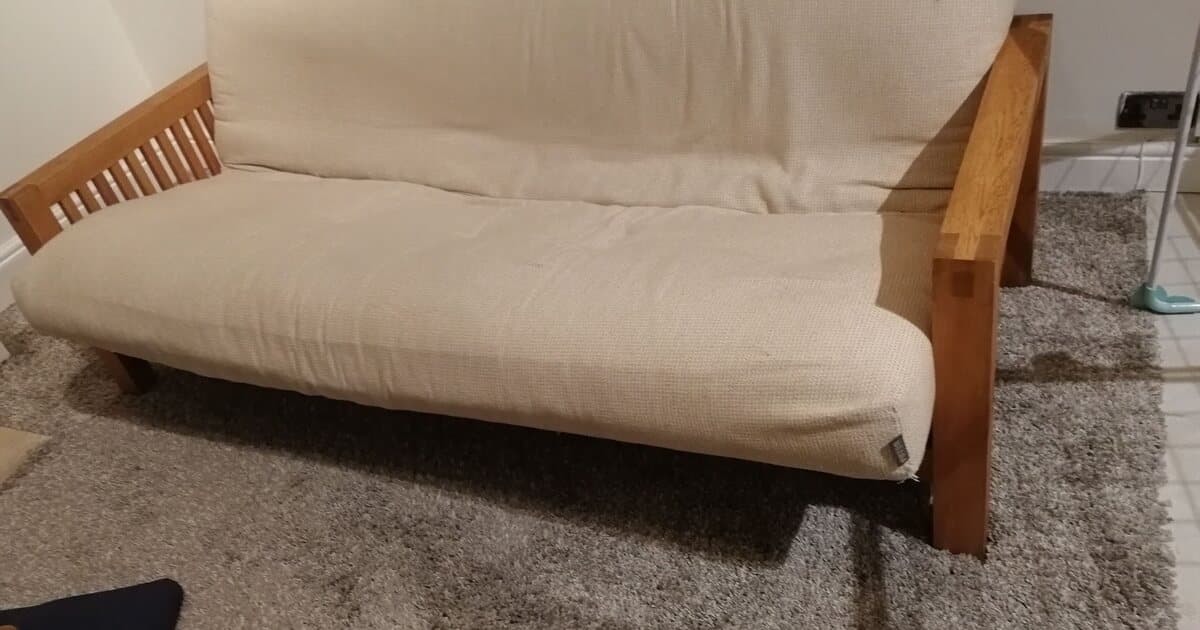
Your rubbish is still your problem after it leaves
Most people assume that once a sofa is on the back of someone's van, it is that person's responsibility. Legally, it is not that simple. Under section 34(2A) of the Environmental Protection Act 1990, the occupier of a home must take reasonable measures to make sure their household waste goes only to an "authorised person", which in practice means the council or a registered waste carrier.
The Isle of Wight Council puts it more bluntly on its fly-tipping page: "If your waste is found dumped, even if someone else has done it, you could be fined for it."
The fines have gone up. Councils can now issue fixed penalty notices of up to £1,000 for fly-tipping and up to £600 for breaching the household duty of care, and they can search and seize vehicles linked to fly-tipping. Taken to court, fly-tipping under section 33 of the same Act can carry up to five years in prison on indictment.
£600
Maximum fixed penalty for breaching the household duty of care
Source: GOV.UK
£1,000
Maximum fixed penalty for fly-tipping
Source: GOV.UK
203
Fly-tipping incidents recorded on the Island, January to March 2026
Source: Isle of Wight Council report, via OnTheWight
31%
Share of fly-tips in England that were a small van load, 2024/25
Source: Defra
The last figure is the one worth dwelling on. In England in 2024/25, councils recorded 1.26 million fly-tipping incidents, 62% of them involving household waste, and the most common size was a small van load. That is the size of a typical one-off house or garage clear-out, collected by someone with a van. On the Island, a council committee report counted 203 incidents in the first three months of 2026, up from 188 in the previous quarter, with more than half classed as household waste.
Most fly-tipped rubbish started life in someone's house, and someone paid to have it taken away.
The two-minute check: the public register
Every business that carries other people's waste has to be registered with the Environment Agency, and the register is public. You don't need an account, and it is free.
- Ask for the registration number. In England it starts with "CB", usually CBDU followed by digits. A legitimate firm will give it to you without fuss; many print it on their van, invoices or website.
- Search the public register of waste carriers, brokers and dealers. You can search by registration number, business name or postcode.
- Read the entry. It shows the registered name, address, tier and expiry date. Upper-tier registrations have to be renewed every three years, so an expiry date in the past means the registration has lapsed.
- Match it up. The name on the register should match the name on the quote, the invoice and, ideally, the van. A real registration number belonging to a different business is a bad sign.
If you'd rather not do it online, the Isle of Wight Council suggests calling the Environment Agency on 03708 506506 to check a carrier. Our step-by-step guide to checking a waste carrier licence goes through the register entry line by line, including upper and lower tier.
Questions worth asking before you book
A registration number tells you the firm is allowed to carry waste. It does not tell you what they do with it. A few plain questions cover most of the rest.
Where will it go? On the Isle of Wight there is a short list of legitimate destinations. Business waste, including waste from clearance, building or gardening work in someone's home, cannot go into the household tip. It has to go to the council's Commercial Waste and Recycling Centre at Lynnbottom, where users need a waste carrier licence and a completed waste transfer note before they arrive, or to another permitted site. A good firm will tell you how they sort a load: what goes to reuse, what is recycled and what goes for disposal.
What's included in the price? Loading, carrying down stairs, dismantling, sweeping up afterwards. Get it in writing before the day, so the figure doesn't change once everything is on the van.
Is there anything you won't take? Asbestos, gas bottles, paint and chemicals all need their own route. A firm that says it will take absolutely anything with no questions asked is either very well set up or not thinking about where it goes. Our guide to hazardous household waste explains which items need special handling.
Will I get a receipt with your registration number on it? The answer should be yes.
Why the cheapest price can be the most expensive
This is where the Island's own tip charges are useful, because they show what a legitimate carrier has to pay just to get rid of what they collect. Since 14 September 2026, the council's free DIY allowance at the household tips is for residents bringing their own waste. It does not cover waste transported by a third party on behalf of the resident. So a firm can't simply take your rubbish to the tip for free.
Here is what the council charges a licensed carrier at Lynnbottom's commercial centre:
Lynnbottom Commercial Waste and Recycling Centre: published rates
Checked October 2026. Rates change, so check the council's page for current figures.
- General waste£200 / tonne
- Upholstered seating (sofas, armchairs)Classed as POPs waste and must be incinerated£450 / tonne
- Plasterboard£200 / tonne
- Green waste£50 / tonne
- Soil and rubble£20 / tonne
- MattressSingle £15, double £20, king or queen £25£15 to £25 each
- Scrap metal, cans and textilesFree
On top of that, the firm has a van, fuel, insurance, its registration and the time it takes to load and sort. If someone offers to take a three-piece suite and two mattresses for less than it would cost them to dispose of them properly, it's worth asking how. Sometimes the answer is that the items will be resold or donated. Sometimes it's a lay-by.
Matching the price to the job
A quote that names the volume, the items and what is included
A good signYou know what you are paying for and can compare like with like.
A low price agreed on the doorstep, cash only
Check before you agreeAsk for the registration number and a receipt. If they won't give either, don't hand anything over.
A free collection offered by someone who knocked on your door
Say noThe council warns that collectors like this may not be registered and could take what they want and dump the rest.
Red flags to watch for
None of these proves a firm is dishonest, but each is a reason to slow down and check.
- No registration number, or a vague answer such as "it's all sorted" or "we're covered by our mate's licence".
- Cash only, no paperwork. There is nothing wrong with paying cash, but a firm that won't give a receipt is leaving you with no record of who took your waste.
- No business address or landline, just a mobile number and a social media page with no name on it.
- Unmarked vehicles and reluctance to let you note the registration plate.
- Cold calls and leaflets offering free collections. The council specifically advises residents not to leave washing machines, barbecues or bikes out for the "scrap man", who "may not be a registered waste carrier and could take the bits they need and dump the rest". Buying scrap metal for cash has been an offence since 2013, and scrap collectors need a council licence.
- A price that is too good to be true, for the reasons in the table above.
- Asking you to leave everything outside for collection "sometime this week" when you won't be there. If you can't see who takes it, you can't record who took it.
The paperwork to keep
The Isle of Wight Council's advice is to get a written receipt or transfer note and to note the vehicle's make, colour and registration. In practice, a good receipt shows:
- the business name and address, matching the register
- the waste carrier registration number
- the date
- a description of what was taken, such as "two-seater sofa, double mattress, 15 bags of mixed household waste"
- the price paid
Photograph it if it is on paper and keep it for a while. If anything turns up in a hedge with your name on it, that receipt is the evidence that you took reasonable measures.
- Business name and address. They should match the entry on the public register.
- Waste carrier registration number. In England usually CBDU followed by digits. Check it on the register before the day.
- The date. When the waste was collected.
- What was taken. A description such as “two-seater sofa, double mattress, 15 bags of mixed household waste”.
- The vehicle. The council’s advice is to note the van’s make, colour and registration.
- The price paid. Agreed in writing before the day, so it doesn’t change once everything is on the van.
- Photograph it. If it’s on paper, take a photo and keep it for a while. It’s your evidence that you took reasonable measures.
Sofas and armchairs are a special case
Upholstered household seating, including sofas, armchairs, recliners, stools and upholstered dining chairs, is covered by separate rules because it may contain persistent organic pollutants, or POPs. According to the government's guidance, it must be incinerated, must not go to landfill and should be kept apart from other waste. If it is mixed into a general load, the whole load has to be treated as POPs waste.
You don't have to manage any of that yourself, but it is a good question to ask. A firm that knows how it handles sofas, and prices them accordingly, has usually thought about the rest of its waste too. If you have a sofa in good condition with its fire safety label still attached, it may not need to be disposed of at all: our furniture removal team sets aside reusable pieces for donation. Mattresses follow different rules again; see mattress disposal.
Ask us for our registration number
We're a licensed waste carrier and fully insured. Ask for our registration details when you get your quote. Tell us what needs to go and we'll come back with a fixed price.
If something goes wrong
If you find out your waste has been dumped, or you spot a fly-tip, report it to the Isle of Wight Council online or on 01983 823777. Suspected illegal waste activity on a larger scale can go to the Environment Agency incident hotline on 0800 80 70 60. Don't move or open dumped waste yourself: it can contain sharp, hazardous or contaminated items, and it may be evidence.
Check us too
We'd rather you checked. Ask us for our waste carrier registration number when you get a quote, look it up on the register and hold us to the same standard as anyone else. Whether it's a few items of rubbish removal or a full house clearance, you'll get a free quote and an agreed price before anything is booked. If you're still weighing up whether to hire anyone at all, our comparison of man and van versus skip hire sets out the options.
Want it gone without the lifting?
Tell us what needs to go and we'll come back with a price. Anywhere on the Isle of Wight.

Written by
Michael Shaw
Michael looks after marketing at Isle of Wight Rubbish Removal and has worked in rubbish removal full-time in the past.
About Isle of Wight Rubbish Removal