

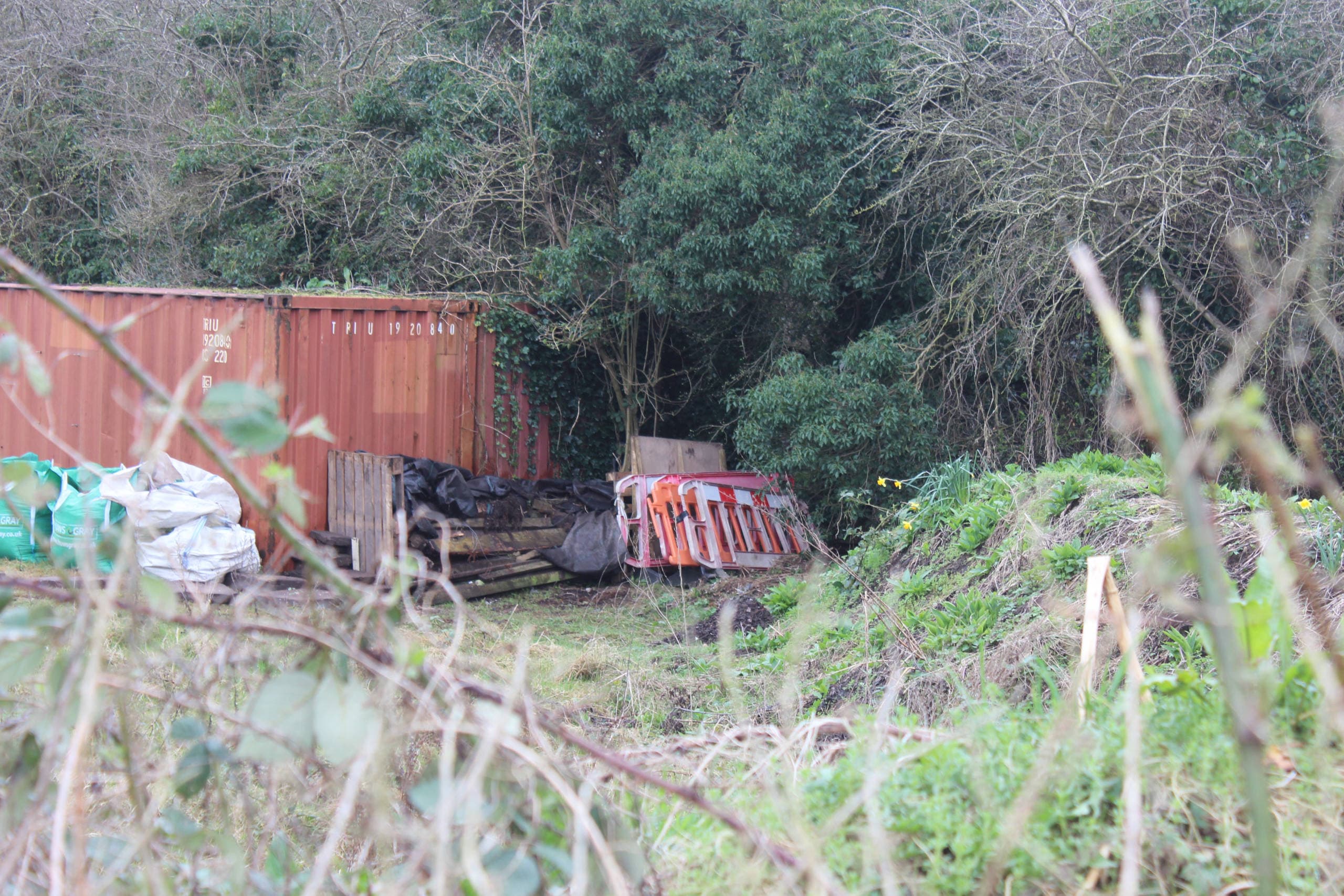
Start outside: where would the skip actually go?
A skip is a steel box that needs a flat, hard patch of ground and room for a lorry to lower it there. If you have a drive, that is a decision you can make on your own. If you don't, it becomes a conversation with the highway authority.
On the Isle of Wight that means Island Roads, which issues licences for builders' skips on the public highway on behalf of the council. Its 2026 application form sets out the terms plainly: £44 per week or part week, at least 10 clear working days' notice, and the warning that licences will "normally" not be granted for skips on footways or verges. The skip owner accepts liability for lighting it. The form is filled in by the skip firm, so the fee usually reaches you inside the hire price rather than as a separate bill, but the notice period is yours to plan around.
The law behind it is section 139 of the Highways Act 1980. A skip on the highway must be lit in the dark, marked with the owner's name and phone number or address, and removed "as soon as practicable" once it's full.
£44
A week (or part week) for a skip licence on the public road
Source: Island Roads application form, 2026
10
Clear working days of notice needed for that licence
Source: Island Roads application form, 2026
£62
Council bulky waste collection, up to four items from the kerb
Source: Isle of Wight Council
Now picture the streets where a lot of Island clear-outs happen. Ventnor's commercial centre sits on steep terraces about 45 metres above the sea, and Steephill Cove has no road access at all. Yarmouth still has the street plan of a town chartered in 1135. Ryde's centre climbs a hill lined with Regency and Victorian buildings, many of them converted into flats with no front garden. In streets like these a skip can mean ten working days of waiting, a week or more of a parking space lost, and a box the neighbours will happily fill for you overnight.
A van needs none of that. It parks for the length of the job, the crew carries the waste out, and the space is free again when they go.
Who carries it to the box?
This is the difference people underestimate. A skip is a container, not a service. It's delivered empty and collected full, and everything between those two moments is your labour: down the loft ladder, through the hall, out of the back garden, and up and over the side.
If the waste is already in a heap on the drive and you have two strong helpers, that matters less. If it's a wardrobe on the first floor, a garage that hasn't been opened since 2009, or a parent's house you're clearing from the mainland on a ferry-timed weekend, it's most of the job.
A man-and-van rubbish collection turns that round. The crew comes to where the waste is, carries it out, loads it and sweeps up. You point; they lift.
A skip saves you the van. It doesn't save you the stairs.
What can't go in a skip, and why it matters more than the price
Skips are hired for mixed waste, but a lot of what turns up in a real household clear-out can't legally or safely go in one. Ask the hire firm for its list before you start loading, because a refused item means a second trip somewhere.
- Sofas, armchairs and other upholstered seating. Government guidance says waste upholstered domestic seating may contain persistent organic pollutants and must be incinerated, not landfilled. It should be kept apart from other waste: if it's mixed in, the whole load has to be treated as POPs waste.
- Gas bottles. The Isle of Wight Council is blunt: they must never go in general waste or a skip because they can explode. Return them to the supplier or take them to a recycling centre.
- Fridges, freezers, TVs and other electricals. These go through separate recycling routes under the WEEE rules, so check whether your skip firm will take them at all.
- Paint, chemicals, asbestos and plasterboard. All of these need their own routes. Bonded asbestos and plasterboard are accepted only at Lynnbottom, with conditions.
A collection doesn't make the rules go away; we still have to send each of those things to the right place. The difference is that the sorting happens on our side, after the waste has left your house, and you tell us what's in the pile before you book. A working fridge can go one way, the sofa another, the bags of general waste a third. That's also why a usable chest of drawers has a chance of a second life: it's carried out dry, not dropped in a skip and rained on for a week.
Skip hire and a collection, side by side
Man and van collection
Best for: Mixed household waste, furniture, awkward access
- Cost
- Priced on what is actually there
- Timing
- One visit; nothing left on the road
- Loaded from wherever the waste is
- No highway licence needed
- Sorted after collection for reuse and recycling
- You only pay for the space your waste fills
Skip hire
Best for: Weeks of renovation waste, rubble and soil
- Cost
- Fixed by skip size, plus licence if on the road
- Timing
- Sits on site for the hire period
- You do all the loading
- Needs a drive, or a licence and 10 working days
- Restricted items must go elsewhere
- Pay for the whole box, full or not
The tip changed in September 2026, and it changes this sum
Until recently a lot of people treated skips and collections as the "proper" options and the tip as the free fallback. The fallback still exists, but it has rules worth knowing before you choose.
Every visit to the Island's two recycling centres, Lynnbottom near Newport and Afton Marsh in Freshwater, now has to be booked in a 15-minute slot, and staff can't help you unload. Afton Marsh opens only on Saturdays, Sundays and Mondays. Vans, pick-ups and most car-derived vans need a vehicle permit, which allows 12 visits.
Then, from 14 September 2026, the council started charging for DIY waste above a small allowance: two 50-litre sacks free per visit, for the resident's own minor DIY. Two details matter for this decision:
- The allowance is personal. Charges apply when waste is "transported by a third party on behalf of the resident", and contractors can't use the free allowance.
- Bulk rubble, plasterboard and soil now cost money at the household tip, from £4 a sack to £30 for a car-boot or trailer load of rubble.
The practical effect: if someone offers to take your renovation waste "to the tip, it's free", it isn't, and they shouldn't be using the household site at all. Business waste, including waste from work done in your home, belongs at the separate commercial centre at Lynnbottom, where the carrier needs a waste carrier licence and pays by the tonne.
How each option charges you
We won't put prices on this page. Skip firms on the Island set their own, and a collection is priced on what's actually there. What we can describe is how each one charges, because that decides which is better value for your job.
A skip is a fixed box at a fixed price. You pay for the whole skip whether you fill it or not, plus the licence cost if it's on the road, plus whatever you then pay to deal with the items it couldn't take. Underestimate and you need a second skip; overestimate and you've paid to hire air. Ask about weight limits too if the waste is soil or rubble.
A collection is priced on volume and type. The labour, the loading and the sorting are part of the price rather than your weekend. For a garage, a loft or a whole house of mixed contents, paying for the space your waste fills usually beats paying for a box and then doing the work. For a single material in bulk, such as a patio's worth of broken concrete, a skip on your drive usually wins, and we'd say so.
There is a third option for small jobs. The council's bulky waste collection takes up to four items for £62, with four dining chairs counting as one item and a three-piece suite as three. The catch is in the terms: everything has to be at the kerb by 7am, and nothing is collected from inside a house, garage or outbuilding. Bathroom suites, doors, fence panels, kitchen units, sheds and anything that isn't furniture or a kitchen appliance aren't taken at all. Our guide to the council's bulky waste collection has the full list and the collection day for each area.
Not sure which way to go?
Tell us what is in the pile and where it is. You get a price before anything is booked, and you can compare it with a skip quote.
Which suits your job?
Match the job to the option
Kitchen or bathroom refit over several weeks, with a drive
Skip hireWaste builds up gradually and you or your builder load as you go. Ask the skip firm about plasterboard, which needs separating.
A tonne of rubble or soil from a garden project
Skip on the driveHeavy single-material loads are what skips do best. Check the weight limit before you fill it to the brim.
Clearing a loft, garage or shed in one go
CollectionMixed contents, lots of carrying, and usually some items worth reusing. See our garage clearance service.
No drive, a busy street or a flat above a shop
CollectionNo highway licence, no ten-day wait, nothing left on the road overnight.
A whole house after a death or a move into care
CollectionYou need sorting, reuse and care with paperwork more than you need a box.
Three pieces of furniture you can carry to the kerb
Council bulky wasteUp to four items for £62 if they are on the kerb by 7am. If they are upstairs, a collection will carry them out.
If you're clearing a whole property, house clearance is the service built for it. Estates never arrive as one tidy category of waste, and the items that matter most to a family are often the ones a skip would swallow. For a single packed space, see our garage clearance and loft clearance services; for rubble and refit waste without a skip, see construction waste; and our checklist of what to ask a rubbish removal firm works just as well for a skip company.
The short version
A skip is a good tool for builders, for long jobs and for heavy, uniform waste on private ground. Much of the Island's housing doesn't have that ground, and since the 2026 tip changes there's no free back door for waste carried on your behalf. For one-off clear-outs of mixed household waste, a collection loaded by someone else is usually the straighter route: no licence, no box on the road, and the awkward items sorted after they've left your house.
Want it gone without the lifting?
Tell us what needs to go and we'll come back with a price. Anywhere on the Isle of Wight.

Written by
Michael Shaw
Michael looks after marketing at Isle of Wight Rubbish Removal and has worked in rubbish removal full-time in the past.
About Isle of Wight Rubbish Removal